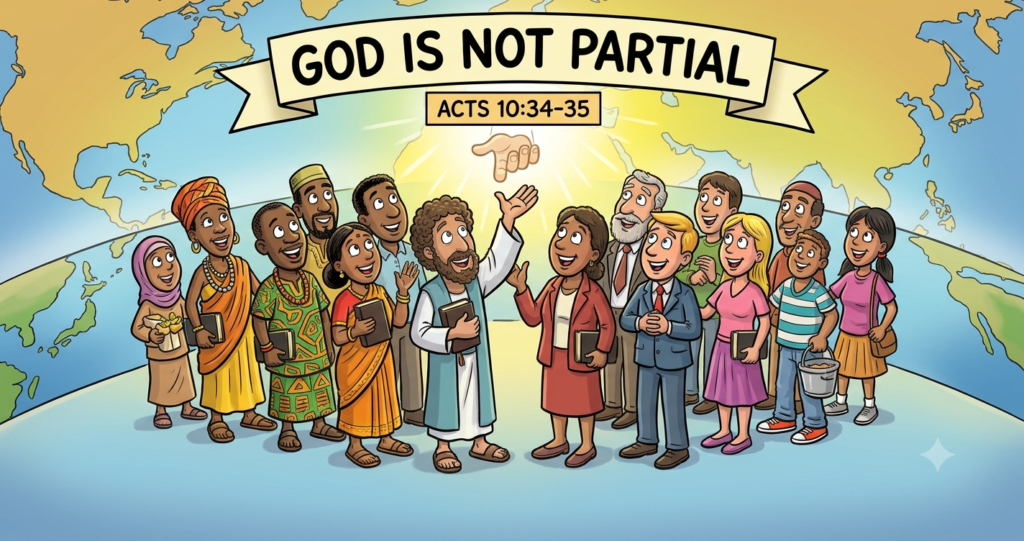
In a world often divided by culture, ethnicity, social status, and national borders, the Bible offers a timeless message about equality and divine acceptance. Few passages encapsulate this truth as profoundly as Acts 10:34–35, where the apostle Peter makes a ground-breaking declaration:
“Now I truly understand that God is not partial, but in every nation the man who fears him and does what is right is acceptable to him.”
1. Context: A Historical Turning Point (36 C.E.)
To grasp the weight of Peter’s statement, we must look at the historical and cultural backdrop in 36 C.E.
- The Tradition: For centuries, Jewish traditions strictly limited close social interaction with non-Jews (Gentiles), viewing them as spiritually unclean.
- The Setting: Peter was staying in Joppa at the house of Simon, a tanner, a detail that hints Peter was already overcoming cultural prejudices, as tanning was a trade many traditionally looked down upon.
- The Vision: While praying on a rooftop, Peter received a divine vision involving a vessel filled with animals deemed “unclean” under the Mosaic Law. A voice told him to slaughter and eat, declaring: “Stop calling defiled the things God has cleansed.”
Simultaneously, about 30 miles north in Caesarea, a Gentile named Cornelius, a Roman army centurion who feared God and gave gifts of mercy, was directed by an angel in a vision to send for Peter.
2. Unpacking the Meaning of Impartiality
When Peter arrived at Cornelius’ home, he recognized that God had orchestrated their meeting. This realization prompted his landmark declaration in Acts 10:34–35.
                 WHAT GOD LOOKS AT

  [ External Factors ]            [ Heart Condition ]
  • Race / Ethnicity              • Reverential Fear / Respect
  • Nationality                   • Desire for Righteousness
  • Social Standing               • Sincere Action / Faith
         ❌                                 ✅
Key Dimensions of God’s Impartiality
- Freedom from External Bias: God’s view of people is not determined by skin color, ethnic background, financial status, or national origin. In the original Greek, the term translated for showing partiality literally refers to a judge who judges based on a person’s outward appearance rather than character.
- Acceptance Based on Heart Condition: God looks at what is inside a person’s heart. As Peter noted, God accepts anyone who:
- Fears Him: Demonstrates reverential respect, honor, and trust in God.
- Works Righteousness: Willingly strives to do what is right in God’s eyes.
- Universal Accessibility: Salvation and divine favor are not reserved for a single privileged group; people from every nation are invited into a relationship with God.
3. Practical Lessons for Today
Understanding God’s impartiality carries profound practical implications for daily life and spiritual practice:
| Dimension | Practical Application |
|---|---|
| Overcoming Personal Prejudice | Reflect God’s view by examining our own hearts for hidden biases regarding race, nationality, or social standing. |
| Preaching Without Favoritism | Share the good news with everyone without making preliminary judgments based on a person’s appearance or background. |
| Building Inclusive Communities | Treat all individuals with dignity and respect, fostering genuine unity in faith. |
Summary Key Takeaways
- Acts 10:34–35 marks the opening of the gospel message to Gentiles, proving that God does not favor one race or nation over another.
- True Acceptance: God measures individuals by their reverence for Him and their desire to practice righteousness, rather than external circumstances.
- Our Goal: As followers of God, we are called to imitate His impartiality in how we view, treat, and reach out to others.