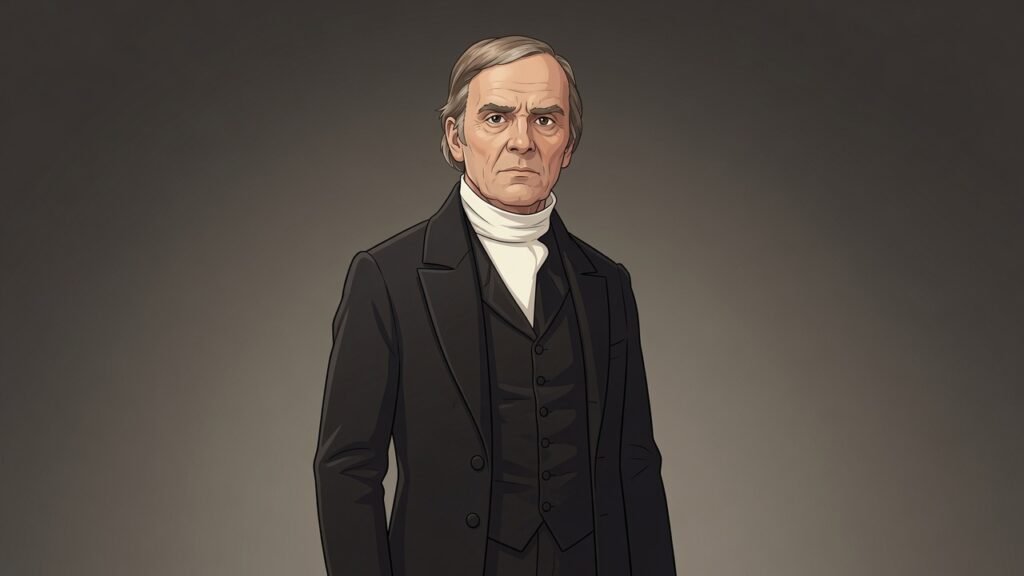
Henry Grew (December 25, 1781 – August 8, 1862) was a British-born American Baptist minister, theologian, writer, and abolitionist whose independent biblical studies led him to reject several core orthodox Christian doctrines of his era, including the Trinity, the inherent immortality of the soul, and eternal conscious torment in hell. His views aligned with conditional immortality (or conditionalism)—the idea that immortality is a gift granted to the righteous at resurrection, while the wicked face annihilation rather than endless suffering. Though he pastored only briefly in mainstream churches due to these convictions, Grew influenced later religious thinkers, notably George Storrs and, indirectly, Charles Taze Russell (associated with the early Bible Student movement and Jehovah’s Witnesses).
Early Life and Education
Henry Grew was born on December 25, 1781, in Birmingham, England (then a center of industry and Enlightenment-influenced thought), to John Grew (a merchant or similar) and Mary (Coltman) Grew. At age 13 or 14 (around 1794–1795), he emigrated with his family to the United States, settling first in Boston, Massachusetts. There, he experienced a religious conversion and joined a Baptist church.
He graduated from Brown University (then Rhode Island College) and entered business in Providence, Rhode Island. By age 23 (around 1804), he was elected deacon of the First Baptist Church in Providence and soon licensed to preach, serving briefly in Pawtucket (Pawtuxet).
Ministry and Theological Development
In 1807, Grew became pastor of the First Baptist Church in Hartford, Connecticut, serving for about four years (some accounts say up to a decade). He led a notable revival early in his tenure, adding many converts. His connection with the church ended around 1811 when his evolving views, deemed heretical—diverged from Baptist orthodoxy. He continued preaching informally to sympathetic groups.
Grew’s theology emphasized a return to primitive Christianity and strict biblical literalism over creedal traditions. Key positions included:
- Rejection of the Trinity: He viewed Christ as subordinate to the Father, detailed in works like An Examination of the Divine Testimony Concerning the Character of the Son of God (1824, with later editions).
- Conditional Immortality and Soul Sleep/Annihilationism: He argued that the soul is not inherently immortal but dependent on the body; the dead are unconscious until resurrection, and the wicked are ultimately destroyed (e.g., The Intermediate State, ca. 1835/1844; Future Punishment, Not Eternal Life in Misery, 1844).
- Emphasis on believer’s baptism, congregational practices, and the practices of the early church.
He published his first writing in 1810 (Christian Loyalty, a sermon on Matthew 22:21). Over decades, he produced numerous pamphlets and books, including A Tribute to the Memory of the Apostles (1832/1836), The Practices of the Early Christians Considered (1838), An Appeal to Pious Trinitarians (1857), and Divine Dispensations (1861). Many were self-published or circulated privately.
Social Reform and Activism
Beyond theology, Grew engaged in broader reform:
- Bible and Education Societies: Involved with the Connecticut Bible Society early on; a founding shareholder of the Hartford Female Seminary in the 1820s.
- Peace Societies: Participated in Hartford and Connecticut Peace Societies in the 1830s.
- Abolitionism: Joined the New England Anti-Slavery Society in the 1830s, speaking publicly. He corresponded with William Lloyd Garrison and addressed female anti-slavery groups. In 1840, he and his daughter Mary attended the World Anti-Slavery Convention in London aboard the Roscoe. He preached during the voyage and visited his birthplace in Birmingham.
Notably, Grew held traditional patriarchal views on gender roles. At the 1840 convention, he supported excluding women delegates (including his own daughter) as aligned with “the ordinance of Almighty God,” siding with British organizers. In 1854, he debated Lucretia Mott at a women’s rights convention in Philadelphia, affirming male supremacy. This created tension with more progressive abolitionist-feminists, including his daughter Mary Grew (1813–1896), a prominent abolitionist and suffragist who led the Pennsylvania Woman Suffrage Association.
Personal Life and Later Years
Grew married four times and had several children:
- Susan Pitman (m. 1802; d. 1809/1814): Daughters Eliza, Susan, Julia.
- Harriet/Cate Merrow (m. ~1811–1813; d. 1845): Daughters Mary and Harriet Catherine.
- Elizabeth Parkman Sturgis (m. 1832; d. 1848): Sons Henry Sturgis, Charles Sturgis, Edward Sturgis; daughter Elizabeth Perkins.
- Jane Norton Wigglesworth (m. 1850): No children together; helped raise stepchildren.
He lived in Boston in the 1830s before moving to Philadelphia around 1834/1835 for health and ministry reasons, where he spent his final decades preaching to a small group and writing. He was known for charity, donating half his moderate income to good causes.
Grew died in Philadelphia on August 8, 1862, after illness, at age 80. He was initially buried in Ronaldson Cemetery; remains later moved to Forest Hills Cemetery, Huntingdon Valley, Pennsylvania.
Legacy
Though not a major public figure in his lifetime, Grew’s writings circulated among Bible students and conditionalists. George Storrs encountered Grew’s tract on the state of the dead, which shaped Storrs’ views and Adventist-adjacent movements. Charles Taze Russell and early Jehovah’s Witnesses acknowledged Grew and Storrs as important Bible students. His daughter Mary’s activism preserved family involvement in reform. Grew appears in historical studies of 19th-century dissent, abolitionism, and gender dynamics, and his daughter features in modern plays.
Grew exemplified the era’s ferment of religious individualism, scriptural primitivism, and social reform. His life highlights tensions between personal conviction and institutional orthodoxy, as well as intersections of theology, abolition, and gender in antebellum America. His collected works remain available in archives and online, offering insight into early conditionalist and nontrinitarian thought.
This note tries to reflect the nuances of a man whose piety was widely respected even as his doctrines were contested.