Consonants only in the classic alphabet
Hebrew reads opposite English
5 letters change shape at word end
The “Assyrian” style used in codices
I. A living alphabet
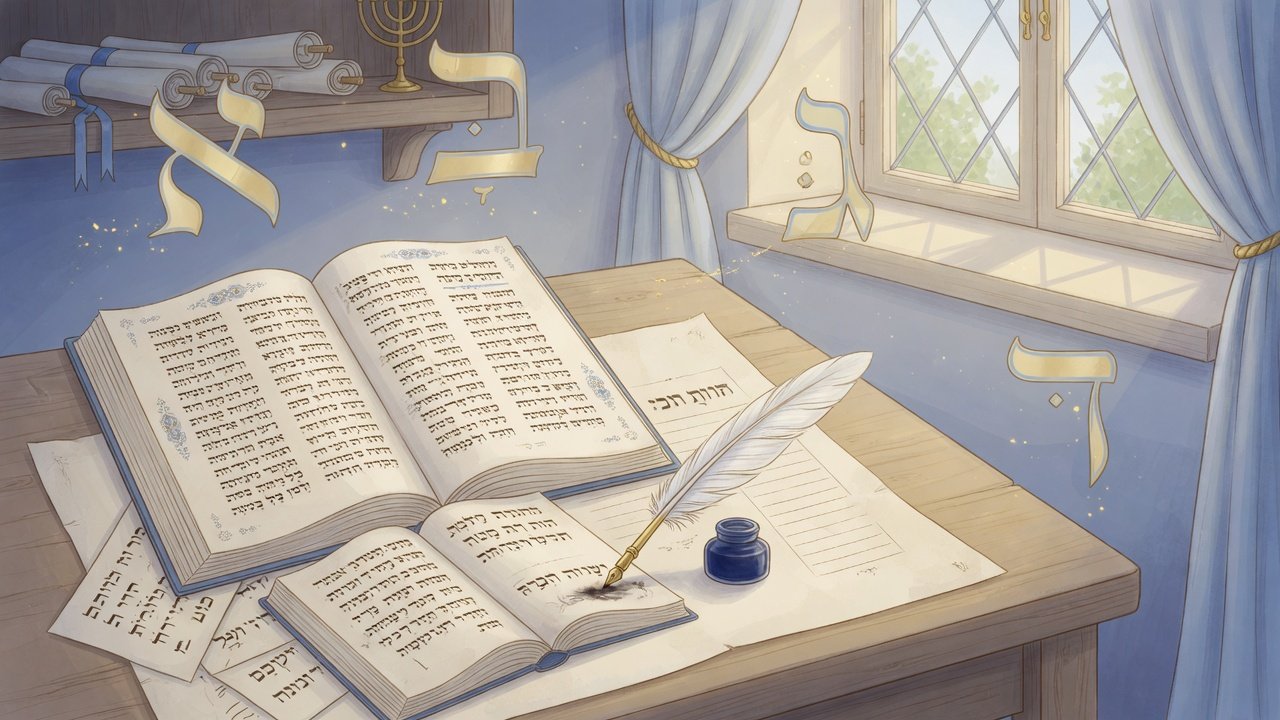
Hebrew’s square script is the visual language of the Masoretic codices and of modern printed Bibles. Each letter is a consonant. Vowels—when written—ride under, inside, or above the letters as niqqud. That is why learning letter shapes first is such a gift: the vowels have somewhere to sit.
Five letters have special final forms used at the end of a word: Kaf ך, Mem ם, Nun ן, Pe ף, Tsadi ץ. Think of them as “end costumes.”
II. Click a letter (hear it in your head)
Tap any tile. The detail panel below will show the name and a simple sound hint. Say the name out loud—muscle memory loves voices.
Select a letter above to inspect it.
III. Final forms cheat sheet
| Regular | Final | Name | Memory hook |
|---|---|---|---|
| כ | ך | Kaf | Final kaf stretches down like a long foot. |
| מ | ם | Mem | Final mem closes into a square box. |
| נ | ן | Nun | Final nun is a single long stroke. |
| פ | ף | Pe | Final pe drops a tail below the line. |
| צ | ץ | Tsadi | Final tsadi also grows a descending tail. |
IV. Video: letter shapes in motion
V. Try this
Alphabet safari (5 min): On a printed page or a screenshot of a Hebrew Bible (try Genesis 1:1 on Sefaria), hunt for three alephs א, three bets ב, and one final mem ם. Circle them lightly.
Make letter flashcards: one side big Hebrew, other side the English name. Play memory match with a sibling or parent.