LEARNING · VIDEO LIBRARY

Educational Videos

Short films and lessons on the Masoretes, vocalization, cantillation, and the transmission of Scripture.

4 videos

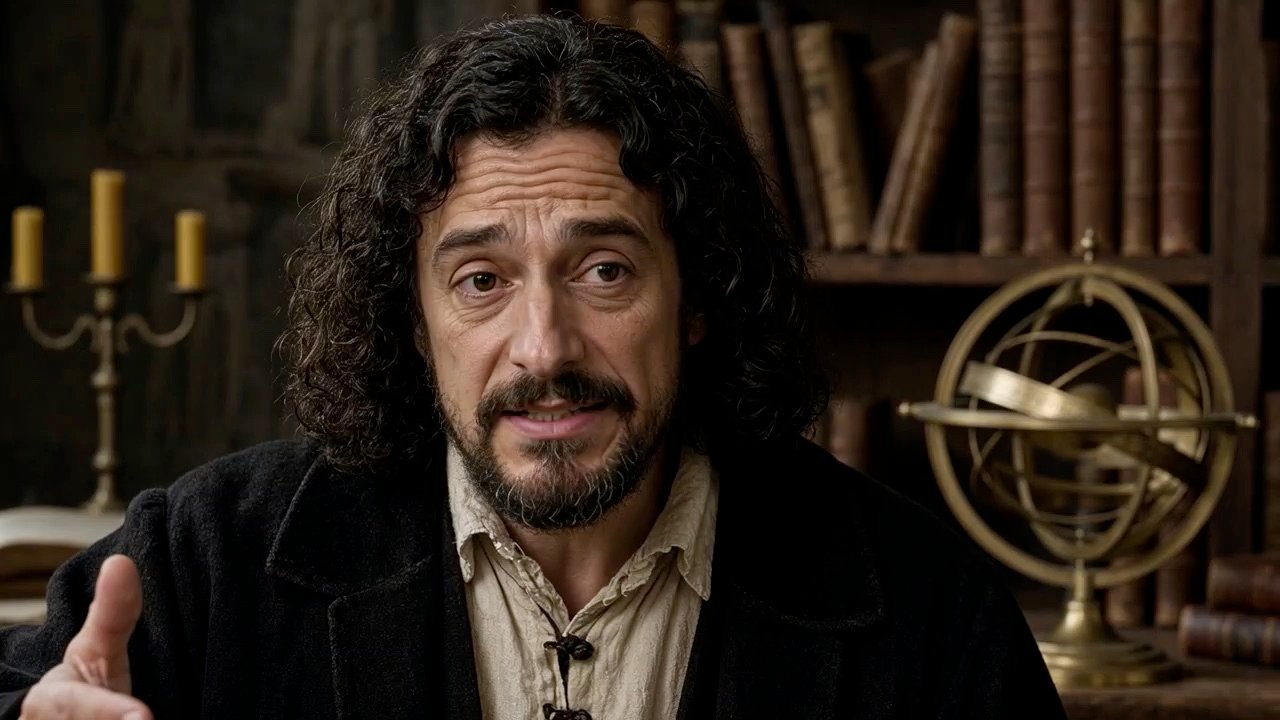
Michael Servetus

Michael Servetus (c. 1511–1553), born Miguel Serveto y Reves in Villanueva de Sigena in Aragon, Spain, was a multifaceted Renaissance polymath, theologian, phys…
Michael Servetus (c. 1511–1553), born Miguel Serveto y Reves in Villanueva de Sigena in Aragon, Spain, was a multifaceted Renaissance polymath, theologian, physician, cartographer, and humanist, whose radical rejection of the doctrine of the Trinity and insistence on a strict biblical unitarinism placed him at the center of one of the Reformation’s most notorious conflicts. After studying law and medicine across France and publishing the provocative De Trinitatis Erroribus (1531) and the comprehensive Christianismi Restitutio (1553), in which he also provided the first accurate European description of the pulmonary circulation of blood, Servetus was denounced by both Catholic authorities and the Protestant establishment; he was arrested in Geneva, tried for heresy under the influence of John Calvin, and burned at the stake on 27 October 1553. He became a lasting symbol of the struggle for freedom of conscience and the tragic intolerance that could arise even among reformers.

Open video & comments

Consonantal Abjads

The niqqud system is fundamentally important because it transformed Biblical Hebrew from an ambiguous, consonant-only script into a precise vehicle for textual…
The niqqud system is fundamentally important because it transformed Biblical Hebrew from an ambiguous, consonant-only script into a precise vehicle for textual transmission. Since the original Hebrew alphabet functions as an abjad—leaving words completely open to multiple interpretations depending on which vowels a reader supplies the exact pronunciation, grammatical nuance, and even the basic meaning of a word relied entirely on fragile oral tradition. By developing this comprehensive system of dots and dashes, the Masoretes successfully codified centuries of oral tradition directly into the physical text without altering the sacred consonantal root itself. This monumental achievement stabilized the linguistic and theological meaning of the Hebrew Bible for future generations, ensuring that the exact pronunciation of the texts could survive the geographical dispersion of the Jewish people and remain unified across centuries.

Open video & comments

Thirty Years War

The Thirty Years’ War (1618–1648) ignited as a fractured, sectarian conflict between Catholic and Protestant factions within the Holy Roman Empire, but its desc…

The Thirty Years’ War (1618–1648) ignited as a fractured, sectarian conflict between Catholic and Protestant factions within the Holy Roman Empire, but its descent into apocalyptic violence stands in stark defiance of the biblical principles it ostensibly sought to defend. While the belligerents claimed to fight for theological purity, their actions flagrantly violated Christ’s New Testament mandates to love one's neighbor (Mark 12:31), turn the other cheek (Matthew 5:39), and act as peacemakers (Matthew 5:9). Instead of reflecting Christian charity, the war rapidly degenerated into a cynical, dynastic struggle for European hegemony, evidenced by Catholic France funding Protestant Swedish armies simply to undermine the Habsburg dynasty. Mercenary forces on both sides used faith as a convenient pretext for unfettered slaughter, mass starvation, and pillage, most notably during the horrific Sack of Magdeburg, where tens of thousands of civilians were massacred by imperial troops. By subjugating the biblical tenets of mercy, forgiveness, and the sanctity of human life to earthly political ambitions, the conflict exposed the profound hypocrisy of waging a "holy" war that ultimately laid waste to much of Central Europe.

Open video & comments

Democratising the Scriptures

William Tyndale’s groundbreaking 16th-century translation of the Bible was the first English version drawn directly from the original Hebrew and Greek texts, as…
William Tyndale’s groundbreaking 16th-century translation of the Bible was the first English version drawn directly from the original Hebrew and Greek texts, as well as the first to be mass-produced via the printing press. For Tyndale, democratizing the scriptures was not merely an academic exercise but an urgent, profound theological necessity. He fervently believed that direct, personal engagement with God's word in the vernacular was the only true path to salvation, deliberately bypassing what he saw as a corrupt ecclesiastical hierarchy that restricted religious knowledge. Driven by his famous vow to ensure that even a "boy that driveth the plough" would know more of the scriptures than a learned cleric, Tyndale viewed his translation as a liberating instrument to emancipate the English laity from spiritual ignorance, an uncompromising conviction for which he was ultimately executed as a heretic in 1536.

Open video & comments