Centuries of Indian life–21st c.
Konkan coast, Mumbai; Israel
Marathi, English, Hebrew
Revival of Hebrew literacy; synagogue humash; modern schools
I. Origins, Memory, and Historical Debate
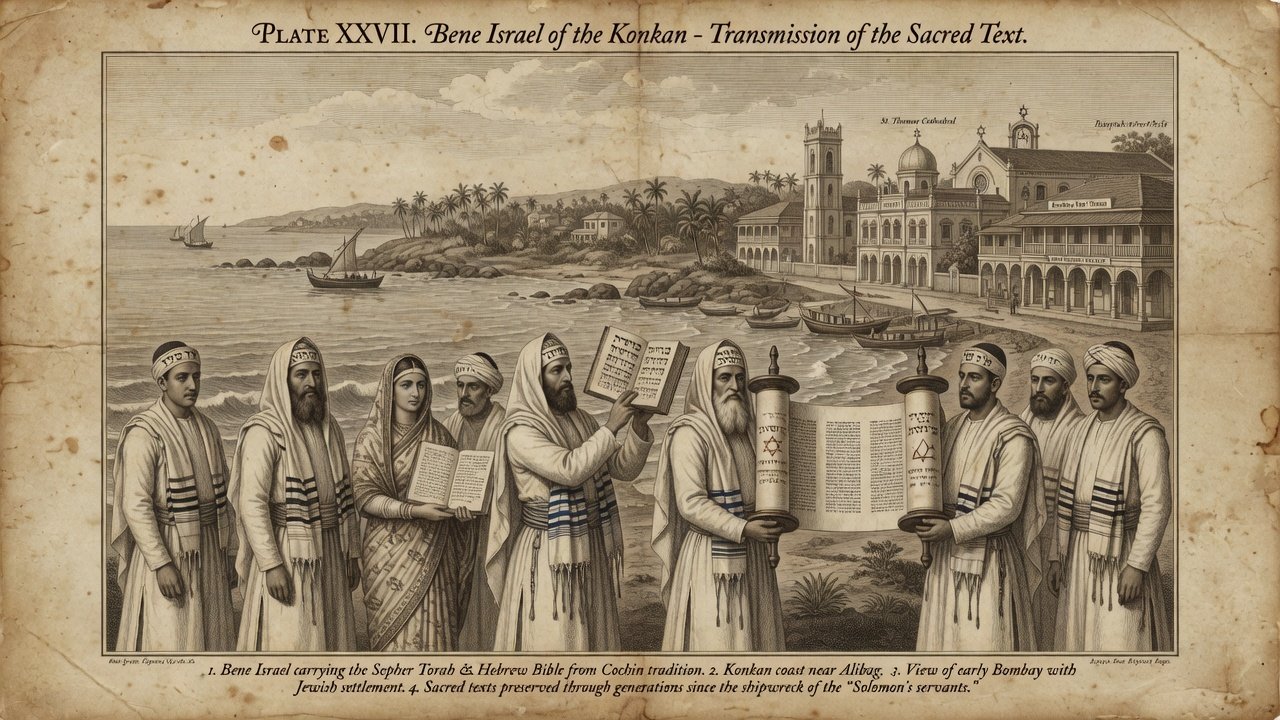
The Bene Israel (“Children of Israel”) of India’s Konkan coast narrate ancient arrival by sea and centuries of life as oil-pressers and villagers (sometimes called Shanivar Teli in older sources) who kept Sabbath, circumcision, and certain foodways while speaking Marathi. Modern historians debate timelines and mechanisms of ethnogenesis; colonial documentation, oral tradition, and genetic studies each contribute incomplete evidence. What is clear for biblical culture is a modern arc of reintensified Hebrew literacy: from relatively thin textual infrastructure to full participation in Masoretic humash education through contact with other Jewish communities and modern schools.
“Bene Israel history is a lesson in how biblical peoplehood can persist with thin texts—and then flood back into the pointed Hebrew page when teachers and books arrive.”
II. Village Religion and Biblical Memory
Before intensive contact with Cochin, Baghdadi, and European Jews, Bene Israel religious life centered on a limited set of observances and on narrative memory of biblical heroes—especially themes associated with the prophet Elijah in local tradition. Full rabbinic curriculum and continuous soferim culture were not historically present in the same density as in Yemen or Eastern Europe. That “thinness” of text did not erase Jewish identity; it shaped a distinctive path of peoplehood later brought into dialogue with global Jewish book culture.
III. Contact, Teachers, and the Hebrew Revival
From the eighteenth and nineteenth centuries, contact with Cochin Jews, Baghdadi merchants from Iraq and beyond, and Christian and Jewish educators increased access to printed Hebrew Bibles, grammars, and synagogue norms. Teachers (including figures celebrated in communal memory) helped standardize prayer and Torah reading around the Masoretic text. Mumbai (Bombay) became the urban hub: synagogues, schools, and middle-class professions.
This revival is one of the clearest modern case studies of a community adopting dense Masoretic literacy after centuries of more limited textual infrastructure—comparable in educational drama (though not in content) to other literacy revivals in the Jewish world.
IV. Bible Pedagogy in Mumbai and the Konkan
Schools taught the alphabet, pointing, prayerbook fluency, and the weekly portion. Marathi remained a vernacular of explanation; English entered through colonial education. Printed humashim with classical commentaries connected Bene Israel students to the same Rashi-centered and Sephardi-influenced commentarial world used elsewhere. Women gained literacy through modern schools, expanding domestic reading of prayers and Scripture.
V. Twentieth Century: Zionism, Independence, Aliyah
Indian independence and Zionist movements reoriented communal futures. Many Bene Israel emigrated to Israel, where they encountered rabbinic bureaucracy over status questions even while integrating into Israeli schools that teach Tanakh as a national subject. Others remained in India, sustaining small synagogue communities. Israeli Bene Israel organizations preserve Konkan memory and family histories alongside standard Hebrew Bible education.
VI. Comparative Indian Jewry
Alongside Cochin and Baghdadi Indians, Bene Israel complete a triangle of Indian Jewish biblical cultures—each entering global Masoretic print culture on a different schedule. Their story belongs on the map of Common Era Jewish Bible cultures as an Indian Ocean path, not as a footnote to European Jewish history.
VII. Elijah Traditions and Popular Biblical Imagination
Bene Israel popular religion gave special place to traditions associated with Elijah, integrating biblical prophetology into Konkan sacred geography. Such patterns show how biblical figures structure identity even when full rabbinic curricula arrive late. Modern education then re-anchors those memories in the Hebrew text of Kings and the haftarot.
VIII. Status Debates and Educational Consequences
Israeli rabbinic debates over Bene Israel status affected marriage and communal standing for some families. Educationally, the drive to demonstrate normative Jewish knowledge intensified Tanakh and halakhah study. The politics of recognition thus shaped Bible pedagogy—an important reminder that transmission is social, not only textual.
IX. Literature, Memoir, and the Humash
Bene Israel authors writing in English, Marathi, and Hebrew document village origins, Mumbai modernity, and Israeli absorption. Memoirs often mention school Bibles, synagogue readings, and the emotional force of first fluency in pointed Hebrew—primary sources for the lived history of Masoretic literacy.
X. Mumbai Synagogues as Schools of the Portion
Urban synagogues in Mumbai concentrated teachers, printed humashim, and peer pressure toward fluent reading. Architecture and seating encoded communal hierarchy; the bimah encoded shared Scripture. Photographs and minute books of synagogue committees are sources for when Hebrew schools expanded, which editions were purchased, and how festival reading was assigned.
XI. From Konkan Oil Presses to Israeli Classrooms
The occupational journey from village oil-pressing castes to urban clerks and then to Israeli professions tracks a literacy journey: from limited Hebrew decoding to full Tanakh study under state curriculum. Bene Israel history compresses into two centuries a pedagogical transformation that other communities spread over longer print revolutions.