נִקּוּד niqqud — “pointing”
Show vowels & some distinctions
Usually unpointed (letters only)
Fully pointed for learners
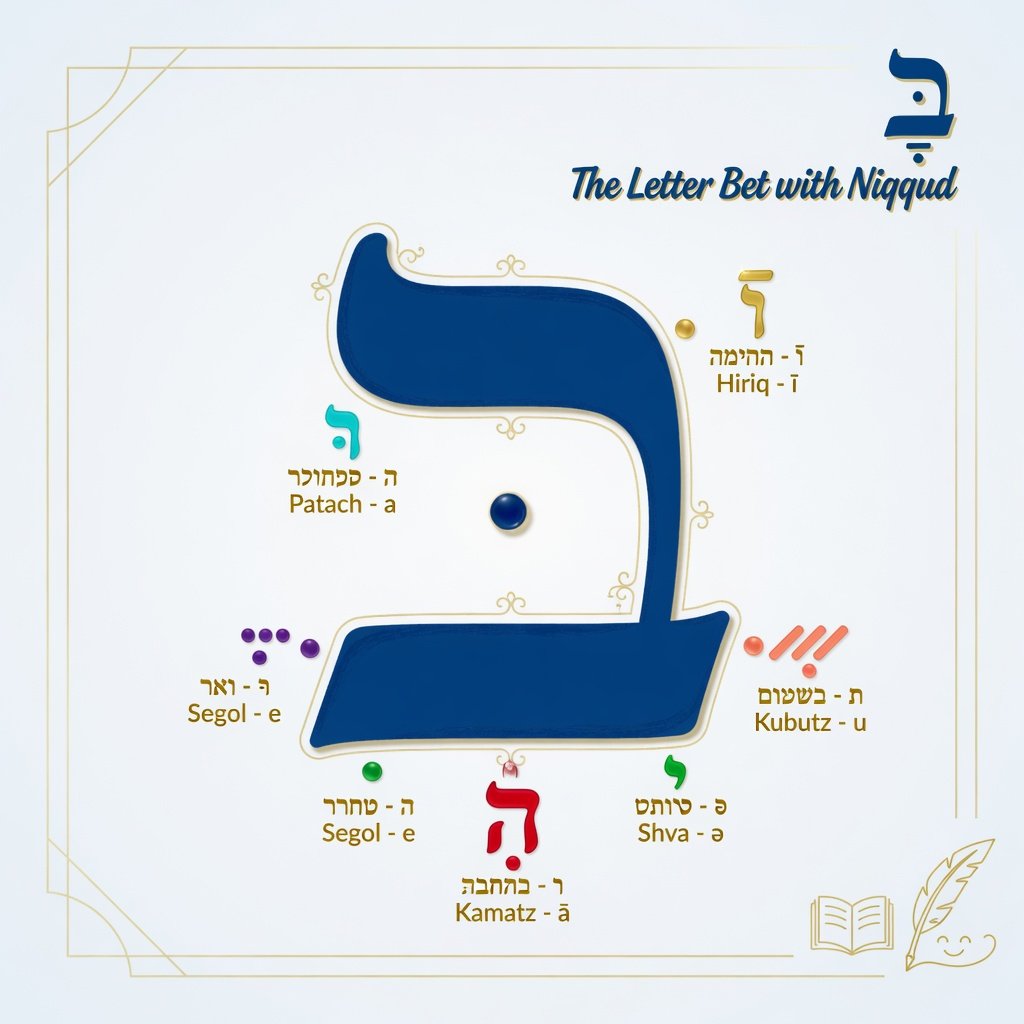
I. Why dots appear at all
Early Hebrew writing usually recorded consonants. Communities that still spoke the language could “hear” the vowels. As Hebrew became a learned language for more people, teachers needed a way to freeze pronunciation in ink. Several pointing systems appeared; the Tiberian system of the Masoretes became the standard for the Bible most Jews and scholars use today.
The specialists who added these points are remembered as nakdanim—“pointers.” Their work sits beside the earlier labor of the soferim who guarded the bare letters.
English writes vowels as letters (A E I O U). Hebrew often writes vowels as tiny jewelry under the consonants. Same job, different fashion!
II. Consonants without vowels vs. with vowels
A trained reader supplies vowels from memory and tradition.
Dots guide every learner to Bereshit—“In the beginning.”
III. Where the marks live
- Under the letter — most vowels (patah, qamats, hireq, tsere, segol…).
- Above the letter — holam (a dot over the upper left of a letter or on a vav).
- Inside / after — shuruq is a vav with a dot in its middle (וּ).
- Inside a consonant — dagesh is a center dot that can harden a sound (bet/vet, pe/fe…).
IV. Video: vowels explained gently
V. Try this
Draw a large bet ב. Under it, place a single horizontal dash (that is the idea of a patah). Say “bah.” Then erase the dash and put two stacked dots side by side under the letter (the idea of a tsere). Say “bey.” You just changed a vowel by moving dots!