Teʿamim · trop · accents
Melody · punctuation · stress
Above & below the words
Reading becomes communal song
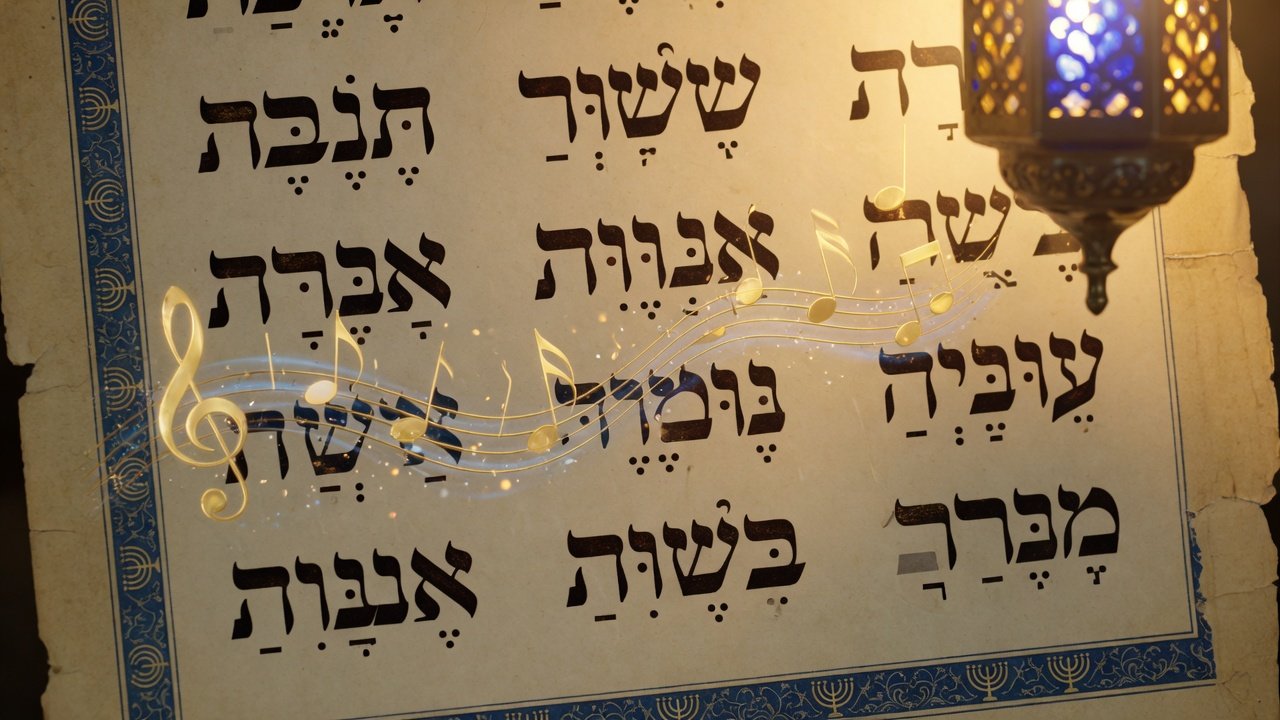
I. Marks that sing
Cantillation marks (Hebrew טְעָמִים, teʿamim, often called trop in Ashkenazi communities) are written above and below the biblical text. They do three jobs at once:
- Music — they guide traditional synagogue chant melodies.
- Punctuation — they show which words group together and where a verse pauses or ends.
- Stress — they often fall on the accented syllable of a word.
Different Jewish communities use different melodies for the same marks. The notation is shared; the tune can feel like home in many accents.
If niqqud is the recipe for how words taste, cantillation is the music playlist for how the verse is performed.
II. Why this matters for meaning
A pause in the middle of a verse can change how phrases bind together—much like a comma in English. Masoretic accents are a careful map of those pauses. Even if you never chant publicly, recognizing the map makes silent reading smarter.
The teʿamim are a gift from teachers who refused to let the music of Scripture be forgotten.
III. Listen: Torah chant example
Play a short sample of traditional Torah reading. You do not need to follow every mark yet—just notice how melody and phrasing walk together.
Melodies vary by community. Treat this as one living example among many.
IV. Try this
Read Genesis 1:3 in English twice: first in a flat robot voice, then with natural pauses: “And God said—‘Let there be light’—and there was light.” That second reading is what trop aims to protect in Hebrew.
V. Bridge
Site module: Cantillation (Teʿamim). Encyclopedia overview: Hebrew cantillation.